Belmont Eurus S6 E Review: Why We Chose It for The Dental Barns
David Drew reviews the Belmont Eurus S6 E at The Dental Barns: why we chose its folding legrest and below-the-patient delivery, our Pearlised Mica specification, 921 LED light, micromotor choice, maintenance routine and the small issues we have learned from in daily use.

Belmont Eurus S6 E: Why We Chose It
For a patient, a dental chair can look like a fairly simple piece of equipment. For a dentist, nurse or practice owner, it is one of the most important pieces of engineering in the room.
You may spend thousands of clinical hours working around it, while every patient forms part of their first impression of the surgery from the moment they sit down.
When we designed The Dental Barns in Lichfield, we tried lots of dental chairs and treatment centres before making a decision. The one we kept coming back to was the Belmont Eurus S6.
The non-technical reason was simple: it was the most comfortable chair we sat in. The more technical reason was that the whole S6 concept fitted the way we wanted dentistry to feel — less equipment looming over the patient, a more natural consultation position, excellent access, and the ability to move the clinical hardware discreetly out of sight when it is not needed.
A good treatment centre has to work brilliantly for the clinical team without making the patient feel surrounded by dental equipment.
What Is the Official Model?
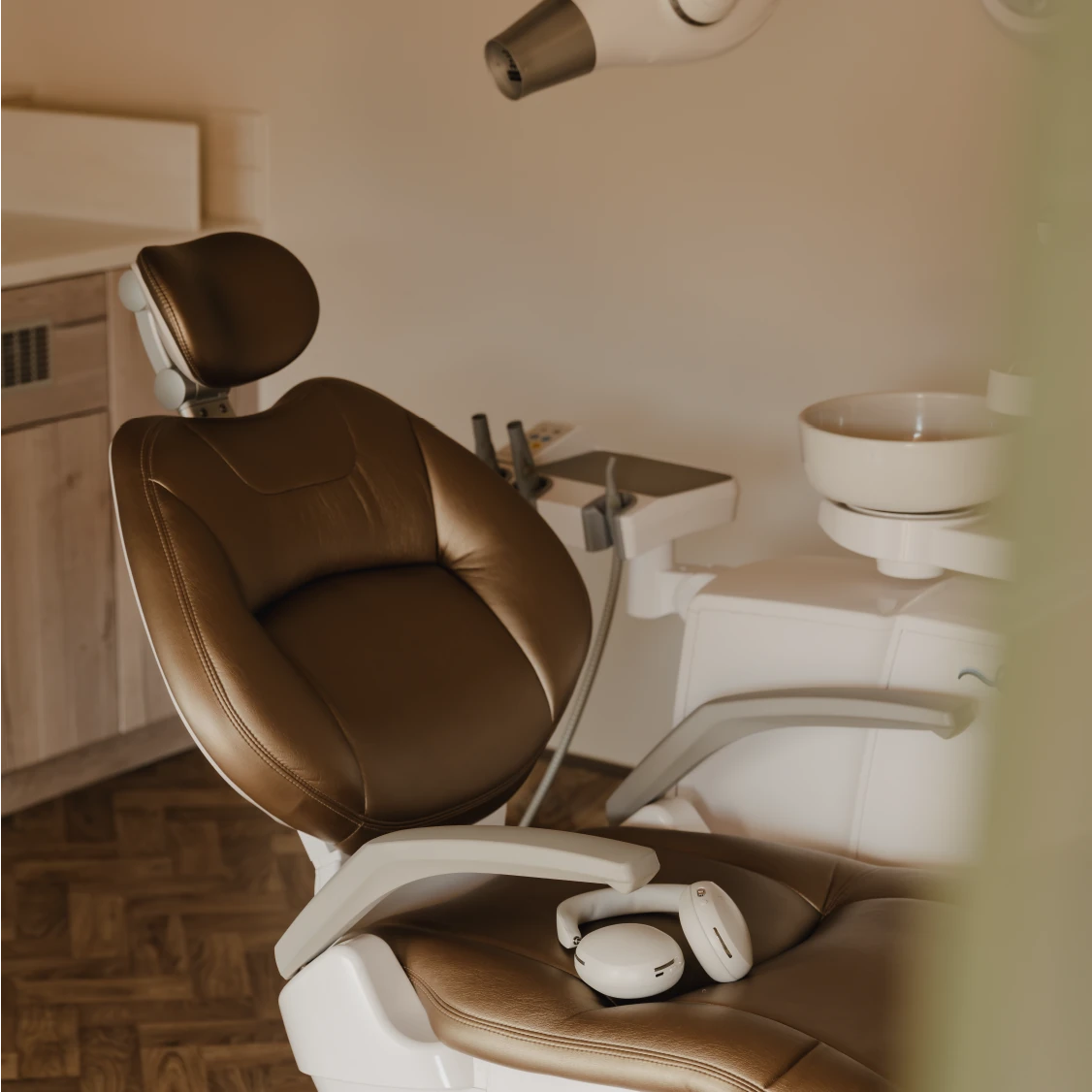
Our treatment centre is the Belmont Eurus S6 ‘Surgery System’ Holder Type (E), Below-the-Patient Delivery System, with a unit-mounted 921 LED operating light.
The ‘E’ denotes the electric-motor version of the delivery unit, while the S6 itself uses Belmont’s folding and extending legrest — sometimes described informally as a knee-break chair. That folding legrest is one of the features that made the biggest difference to us in real-world use.
Our Belmont Eurus S6 Specification
This is the specification and configuration we chose, alongside a few useful current figures from Belmont’s technical literature. Specifications and factory options can change, so anyone ordering a new unit should always confirm the exact build on the current order sheet.
- Model: Belmont Eurus S6 ‘Surgery System’ Holder Type (E)
- Delivery: below-the-patient swing-arm delivery system
- Legrest: folding and extending legrest for upright consultation and improved entry/exit access
- Maximum safe working patient weight: 165kg
- Headrest: twin-articulating headrest for fine positioning
- Chair movement: synchronised-axis backrest and seat movement with quiet hydraulic operation
- Backrest: taller cushion with additional lumbar support
- Armrest: folds 180 degrees towards the rear to open the patient entry zone
- Chair control: integrated foot stalks, two pre-set positions, Last Position memory, Auto-Return and six operator configurations
- Doctor table: height-adjustable tray with pneumatic release and lock, plus an independently adjustable handpiece holder
- Instrument control: intuitive touch-screen with advanced instrument settings
- Handpiece outlets: three fibre-optic and one non-optic outlet, plus an autoclavable three-way syringe
- Micromotor: our original specification used an NSK electric micromotor package with a speed-increasing handpiece; Belmont’s current S6 E specification now lists the NSK NLX-Plus as a no-cost alternative to the Bien-Air MX2, so check the exact motor generation when ordering
- Factory options: compatible configurations can be specified with WaveOne endodontic functionality, implantology integration, additional micromotors, scalers, intraoral camera mounting and other options
- Foot control: wireless electronic instrument foot control; Belmont’s documentation lists low-battery indication through the unit
- Assistant side: extendable console arm with safety lockout, detachable HVE/saliva ejector tubing, twin HVE capability with ball-joint connections, automatic bowl flush and cup filler
- Cuspidor: removable porcelain bowl with 90-degree rotation and a cuspidor body that can rotate away from the chair
- Operating light: Belmont 921, 10 LEDs, 5,000K white light, approximately 4,000–35,500 lux, touchless sensor, stepless intensity control, three-axis positioning and detachable autoclavable handles
- Upholstery: Ultrasoft Pearlised Mica, colour code 322-3174
- Current published RRP: Belmont’s April 2026 UK price list shows £31,985 + VAT for the S6 Surgery System Holder Type (E) with unit-mounted D-921 light. Our December 2023 quotation recorded an RRP of £29,410 + VAT, which shows how much list pricing has moved since we specified ours.
Why the Folding Legrest Matters More Than You Might Expect
The folding legrest was a major reason we chose the S6. In its upright position, it feels much closer to a normal seat than a traditional flat dental chair with a long leg section projecting into the room.
That changes consultations. We can sit a patient naturally upright, speak face-to-face and discuss photographs, scans or treatment plans without asking them to have an important conversation while semi-reclined. It feels more human and less like somebody has already been positioned for a procedure.
It also opens the front and side of the chair. Belmont specifically highlights this as useful for older, infirm or less mobile patients, and in practice it makes entry and exit noticeably easier. The armrest can fold back out of the way, and the chair becomes much easier to approach.
The extending foot section has another detail we have come to appreciate: a robust clear plastic heel/shoe protector over the foot end. It takes the contact from shoes and heels exactly where you would expect the most wear. After more than two years of daily use, we have had no tears, staining or obvious upholstery damage around that area.
For patients who are nervous, that seemingly small detail matters. The first few minutes of an appointment should feel like a conversation, not a procedure.
No Delivery Unit Hanging Over the Patient
We deliberately did not want a traditional over-the-patient delivery system.
There are ergonomic arguments for both layouts, and plenty of dentists work very happily with an over-patient unit. For our particular practice, however, the below-the-patient S6 arrangement suited both the room and the experience we wanted to create.
The doctor table can swing around the side of the chair and be positioned from roughly the 9 to 1 o’clock working positions. When it is not needed, the doctor table, instruments and assistant tray can be moved behind the chair backrest.
Belmont itself describes this discreet storage position as a way of easing patient anxiety on entering the surgery.
That was exactly our thinking. Handpieces and clinical equipment are excellent for the operator; they are not necessarily what a nervous patient wants in their eyeline during their first conversation.
Being able to hide the clinical side of the room also helps our surgeries feel more like the rest of The Dental Barns: calm, uncluttered and deliberately less clinical on first impression.
Comfort: Still One of Its Best Features
We sat in lots of chairs before ordering, and the Eurus S6 was the most comfortable for us. After prolonged day-to-day use, that remains one of the things we like most about it.
Comfort matters particularly because some of our cosmetic dentistry sessions can run for most or all of the day. Patients can be in the chair for long restorative, bonding or smile-makeover appointments, and we have found they tolerate the S6 very well over those longer sessions.
We will sometimes add extra comfort cushions where it helps an individual patient, but the chair itself gives us a very good starting point for prolonged treatment.
The taller backrest and lumbar support make a real difference, the hydraulic movement is exceptionally smooth and quiet, and the twin-articulating headrest gives the clinician a lot of control without asking the patient to hold an unnatural position.
That headrest is particularly useful in longer restorative and cosmetic appointments. Rather than repeatedly asking somebody to move their head or neck, we can make small adjustments to the support around them and get both the patient and operator into a better position.

The Belmont Eurus S6 is where many of our longest cosmetic and restorative appointments happen, from smile makeovers and composite bonding to carefully planned restorative care.
If you want to experience the chair, the calm setting and a very different kind of dental appointment for yourself, join The Dental Barns VIP for access to Signature Assessment ✦ appointments with Dr Keely.
Pearlised Mica: The Upholstery Choice
We specified Ultrasoft Pearlised Mica (322-3174). The slightly metallic neutral finish fitted the warmer, more residential palette of our surgeries far better than a conventional bright clinical vinyl.
It is also much tougher than its soft feel suggests. Belmont’s current Ultrasoft specification describes a polycarbonate polyurethane surface and lists abrasion performance of 400,000 Wyzenbeek double rubs and 180,000 Martindale rubs.
Belmont also states that its current dental chair designs undergo durability testing equivalent to a ten-year life cycle: 108,000 chair movements while fully loaded to the maximum safe working patient weight.
Those figures interested us when choosing a finish because this is equipment that gets used and cleaned continuously. In our own surgery, the upholstery still looks remarkably close to new. We have had no tears, persistent staining or other notable upholstery damage despite heavy clinical use.
We give the upholstery a dedicated care treatment each week and use products compatible with the manufacturer’s material guidance. It is worth noting that Ultrasoft is a polyurethane upholstery rather than leather, so it should be cared for as the specified healthcare upholstery rather than treated automatically with any domestic leather product.
The 921 LED Light
The unit-mounted Belmont 921 operating light has been another strong point.
Belmont specifies a 10-LED head with a 5,000K white light and an intensity range of around 4,000 to 35,500 lux. The design is intended to maintain the beam even when part of the LED array is obscured by the operator’s hands or body.
The head moves across three axes, the handles are detachable and autoclavable, and the touchless sensor is useful during treatment.
In everyday use, what we notice is how controlled the light feels. It is powerful and very focused without making the whole room feel flooded with harsh clinical light.
We find glare well controlled from the patient position, and the ability to place the head precisely means we can illuminate the working area rather than simply turning the entire light output up.
The Motor Package We Chose
We chose an NSK electric micromotor package with a speed-increasing handpiece. For the restorative work we do, electric speed-increasing handpieces give us the controllability, torque and quieter feel we prefer over relying on an air turbine for everything.
One useful ordering point for other dentists: check the exact model on the build sheet rather than relying on a generic brochure description. Our 2023 paperwork referred to an NSK Nano electric micromotor package, while Belmont’s April 2026 S6 price list identifies the NSK NLX-Plus as the current alternative motor on the E version.
Motor generations and compatible factory options change over time.
The touch-screen itself is excellent for this kind of multi-operator surgery because instrument settings can be stored rather than rebuilt every time. The chair’s position memories are similarly useful when clinicians share a room: presets, Last Position and Auto-Return sound like small conveniences until you use them all day.
A Better Place to Rinse
The rotating cuspidor and removable porcelain bowl are easy to overlook on a specification sheet. In use, the position is very natural.
The bowl can be brought towards the patient for rinsing rather than asking the patient to twist awkwardly towards a fixed bowl. It also rotates away to improve access around the chair. That is better for the patient and useful for the nurse and clinician when working around the left side of the treatment centre.
The Doctor Table: One of Our Favourite Details
The doctor table is simple, but very well executed. The pneumatic release means it can be moved up or down without fighting the arm, then locked where it is wanted. The whole table can be brought into the working zone or parked discreetly behind the chair.
We line the tray with a Traymaid disposable tray liner for every patient, then follow our normal between-patient cleaning and disinfection process. A tray liner is a useful barrier and workflow aid; it does not replace the surface-cleaning process required by the practice’s infection prevention protocol or the manufacturer’s instructions.
A practical installation tip is to have the table-arm tension set with the tray loaded roughly as it will be in real clinical use. Ours needed a small tension readjustment after installation because the table had developed a little drift. It was a very straightforward engineer adjustment, but getting it right makes the table feel significantly better.
Cleaning, Waterlines and CQC / HTM 01-05
This is where it is worth separating the chair’s features from the practice’s responsibilities.
There is no meaningful concept of a dental chair being simply “CQC approved”. CQC looks at how a provider manages safe care, premises and equipment, infection prevention, waterline risk and maintenance. For dental unit waterlines, CQC specifically expects a written waterline management scheme and Legionella risk assessment, with the practice following both its risk assessment and the chair/manufacturer instructions.
Our chair is supplied through a closed water system using on-site reverse-osmosis (RO) water. HTM 01-05 recognises distilled or RO water for self-contained dental care water systems, but using RO water does not remove the need for flushing, disinfection, risk assessment or manufacturer-approved chemistry.
Our own routine includes a deliberately longer 10-minute first flush each morning and flushing between patients. For reference, HTM 01-05 specifies a minimum two-minute flush at the beginning and end of the day and after significant periods of non-use, such as a lunch break, plus at least 20–30 seconds between patients.
A longer morning flush should therefore be seen as an additional local control, not a substitute for the other points in the written protocol.
We also use Cattani Puli-Jet Plus, but an important distinction is that Puli-Jet is for the aspiration / suction system, not the dental unit waterlines. Cattani’s current instructions recommend general aspiration cleaning each evening and a stronger weekly disinfection routine. Keeping the DUWL and suction-line procedures separate in the SOP avoids a surprisingly common source of confusion.
For the chair surfaces and removable components, the Eurus is designed with hygiene in mind: detachable instrument holders, removable bowl, autoclavable handles and a built-in handpiece waterline flush-out system all make routine cleaning easier. As with any treatment centre, the products used still need to be compatible with Belmont’s instructions.
Servicing and the Small Issues We Have Had
No equipment review is useful if it only lists the good bits.
Our Eurus S6 has been very reliable, but it has not been completely maintenance-free. The issues we have seen have been minor:
- A little table drift after installation: the delivery-arm tension needed readjusting once the chair was being used with our normal tray load. It was a quick, simple fix.
- A solenoid affected by limescale: a small amount of scale contributed to a solenoid sticking and resulted in a leaky tap. This happened only a few months ago, with the chair having been in daily clinical use since May 2024. In that context, one relatively minor water-related fault in more than two years is a reliability record we are very comfortable with, and it reinforced why local water quality, RO management and planned maintenance matter.
- Wireless foot-control batteries: in our real-world use, we tend to discover the batteries are flat when the foot control simply stops responding rather than through a useful advance warning. We use Panasonic Eneloop rechargeable batteries practice-wide, so the best solution has been to keep a fully charged spare set ready to swap straight in rather than trying to predict exactly when the installed set will expire.
We schedule an annual service and keep reactive maintenance recorded. CQC’s Regulation 15 focus is that equipment is suitably maintained and safe; for us, a planned annual visit is the simplest way to stay ahead of small mechanical issues rather than running a chair until something fails during a clinical day.
One reassurance for a UK buyer is support. Takara Belmont has a dedicated UK parts and service department, London and Manchester showrooms and an authorised dealer network. The current UK price list also carries a five-year warranty on Belmont treatment centres, chairs and dental lights for the original owner, subject to its warranty terms and authorised installation.
Handy Tips If You Are Specifying an S6
- Sit in it yourself. Specifications do not tell you whether a chair feels right. We tried lots before deciding.
- Test the upright consultation position. The folding legrest is not just an access feature; it can change the tone of the first ten minutes of an appointment.
- Choose the delivery style around the patient as well as the operator. We preferred below-the-patient because the instruments can disappear from view when not required.
- Confirm the motor generation and options on the actual order sheet. Belmont’s E-system motor specification has changed over time, and WaveOne/implant options depend on configuration.
- Set table tension with a realistic tray load. It is the best way to avoid drift once the surgery is live.
- Use the operator memories. If more than one clinician uses the surgery, agree who owns each preset/configuration rather than constantly overwriting one another.
- Keep charged foot-control batteries ready. In our experience the practical warning can be the pedal no longer responding, so a spare charged set is much more useful than discovering the problem mid-session.
- Write separate DUWL and suction protocols. Waterline flushing/disinfection and Puli-Jet aspiration cleaning are different processes.
- Do not let disposable barriers become a substitute for decontamination. Tray liners are convenient; the cleaning protocol still applies.
Would We Choose It Again?
Yes.
The Eurus S6 has done exactly what we hoped it would do. For patients it is genuinely comfortable, easy to get in and out of and visually less intimidating than many traditional treatment-centre layouts.
For the clinical team it gives excellent access, a very usable tray, good positioning, strong lighting and enough memory and control functions to make shared-surgery working easier.
Most importantly, it lets us change the atmosphere of the surgery. We can welcome somebody into a natural seated position with the instruments hidden, have a normal conversation, then bring the clinical equipment into the room only when it is needed.
After daily use, the upholstery still looks excellent, the chair remains extremely comfortable and the maintenance issues we have encountered have been small and straightforward. It is expensive equipment, but it is also the piece of equipment that every patient uses and every clinician works around. For us, it was the right place to invest.
Technical Sources & Further Reading
- Takara Belmont UK — Eurus S6 Below-the-Patient Delivery System
- Takara Belmont UK — Dental Equipment Retail Price List, April 2026
- Takara Belmont UK — Ultrasoft upholstery technical specification
- NHS England — HTM 01-05: Decontamination in primary care dental practices
- CQC — Dental mythbuster 5: Legionella and dental waterline management
- Cattani ESAM UK — Puli-Jet Plus 2.0 instructions
About David Drew
David Drew is Co-Founder and Practice Manager of The Dental Barns in Lichfield. He leads the practice’s operations, technology and patient experience, with a particular interest in how equipment, workflow and design can make dentistry work better for the clinical team while feeling calmer and more transparent for patients.
At The Dental Barns in Lichfield, we’ve reimagined what private dentistry can feel like. Our patients choose us not just for results, but for the calm, luxurious experience that surrounds every visit. From the moment you arrive, you’ll notice the difference — a spa-like environment, thoughtful design, and a team that takes time to understand you. Our exclusive VIP approach means appointments are unhurried, comfort is prioritised, and advanced digital technology ensures precision in every treatment.
Whether you visit for Invisalign, composite bonding, veneers, or gentle hygiene therapy, every detail is considered — from the heated anaesthetic to the aromatherapy scents that make our space feel like home. Transparency, trust, and technology underpin everything we do, allowing patients to relax knowing they’re in expert hands.
Our Why VIP philosophy is simple: world-class dentistry, delivered with warmth, calm, and integrity. It’s why so many of our patients travel from across Staffordshire and the West Midlands to experience The Dental Barns difference.